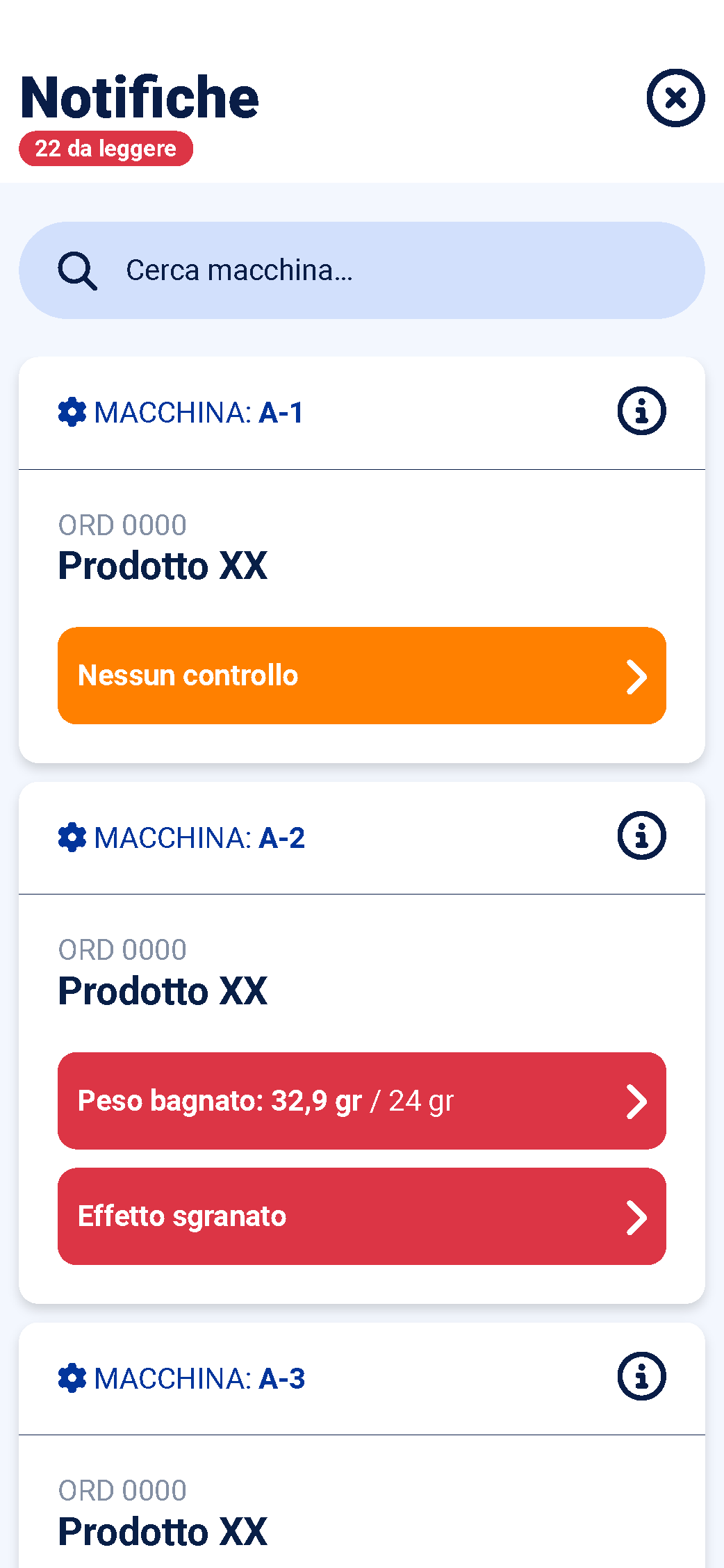
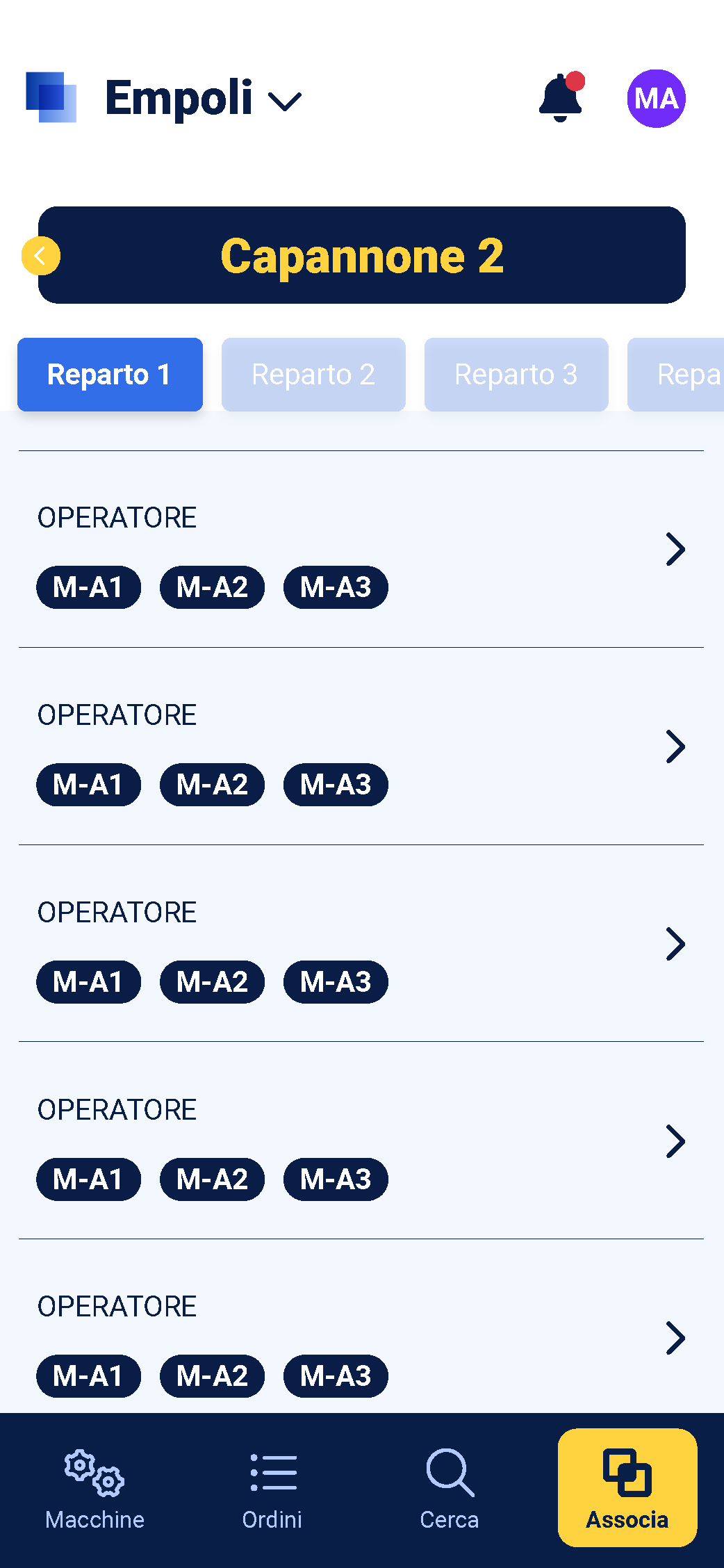
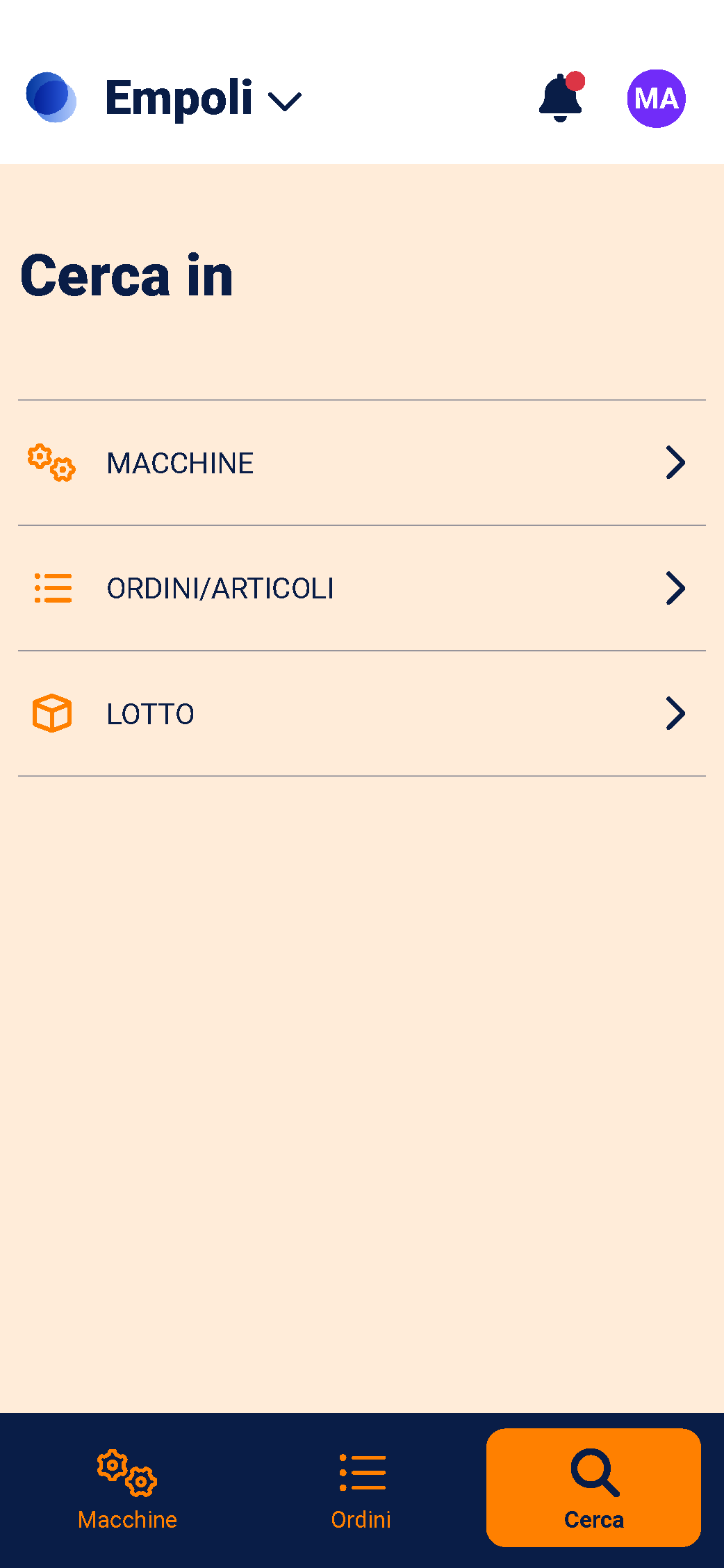
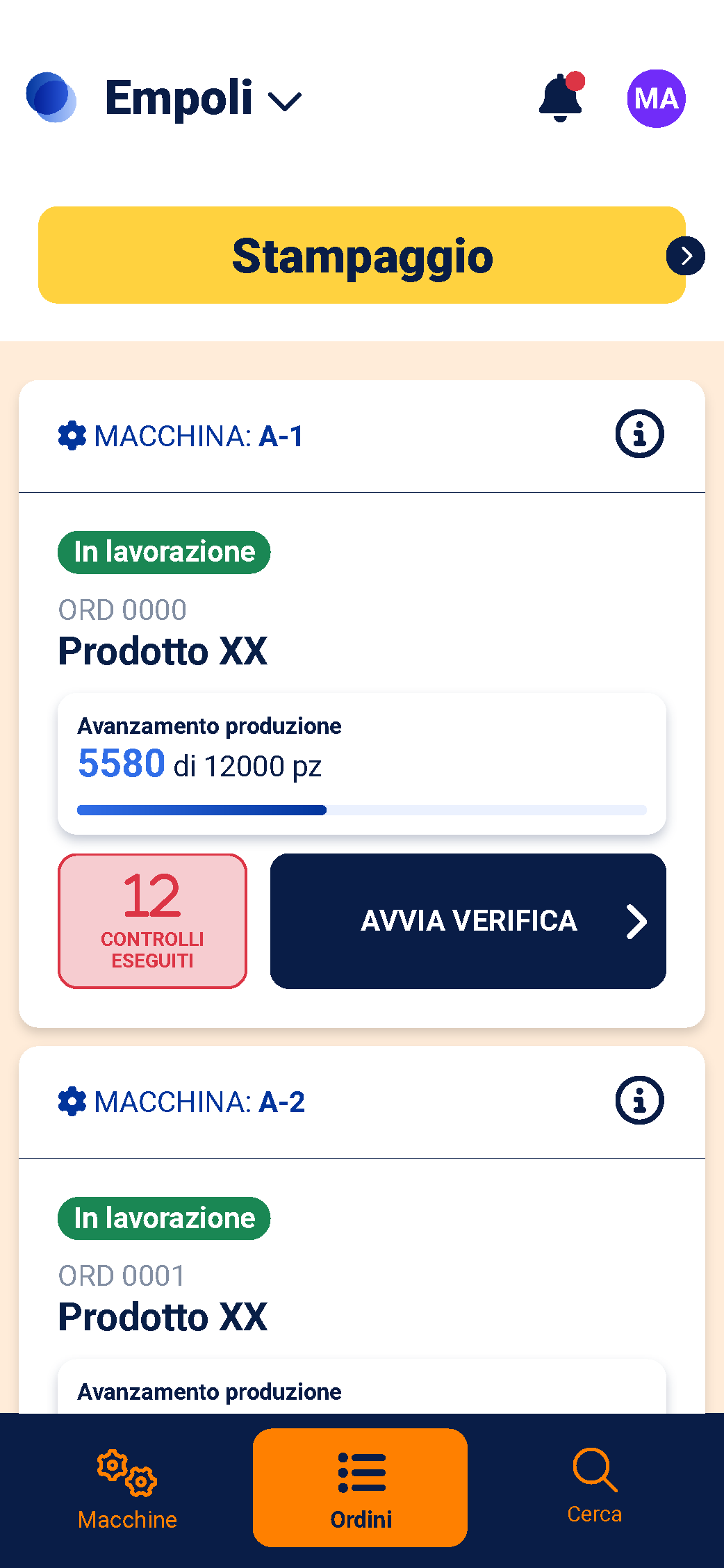
Reduces friction between teams
Each module is designed to remove redundant steps, reduce transcription errors and surface the information each role actually needs.
Landscape creates continuity across production, quality, sales and control without forcing a disruptive rollout. Start from a real bottleneck, activate the right modules and build a system that grows with your process.
Collega ERP, BI, CRM, macchine e persone nello stesso flusso.
Many companies already have software and data, but the handoffs between departments remain slow, opaque or dependent on spreadsheets, chat messages and tribal knowledge. Landscape is built to create continuity across operational flow.
Each module is designed to remove redundant steps, reduce transcription errors and surface the information each role actually needs.
Data collection is not an end in itself. Information is structured so it can feed ERP, analytics, quality and control systems.
This is not a monolithic transformation. You start from one team or one bottleneck and expand when the process is ready.
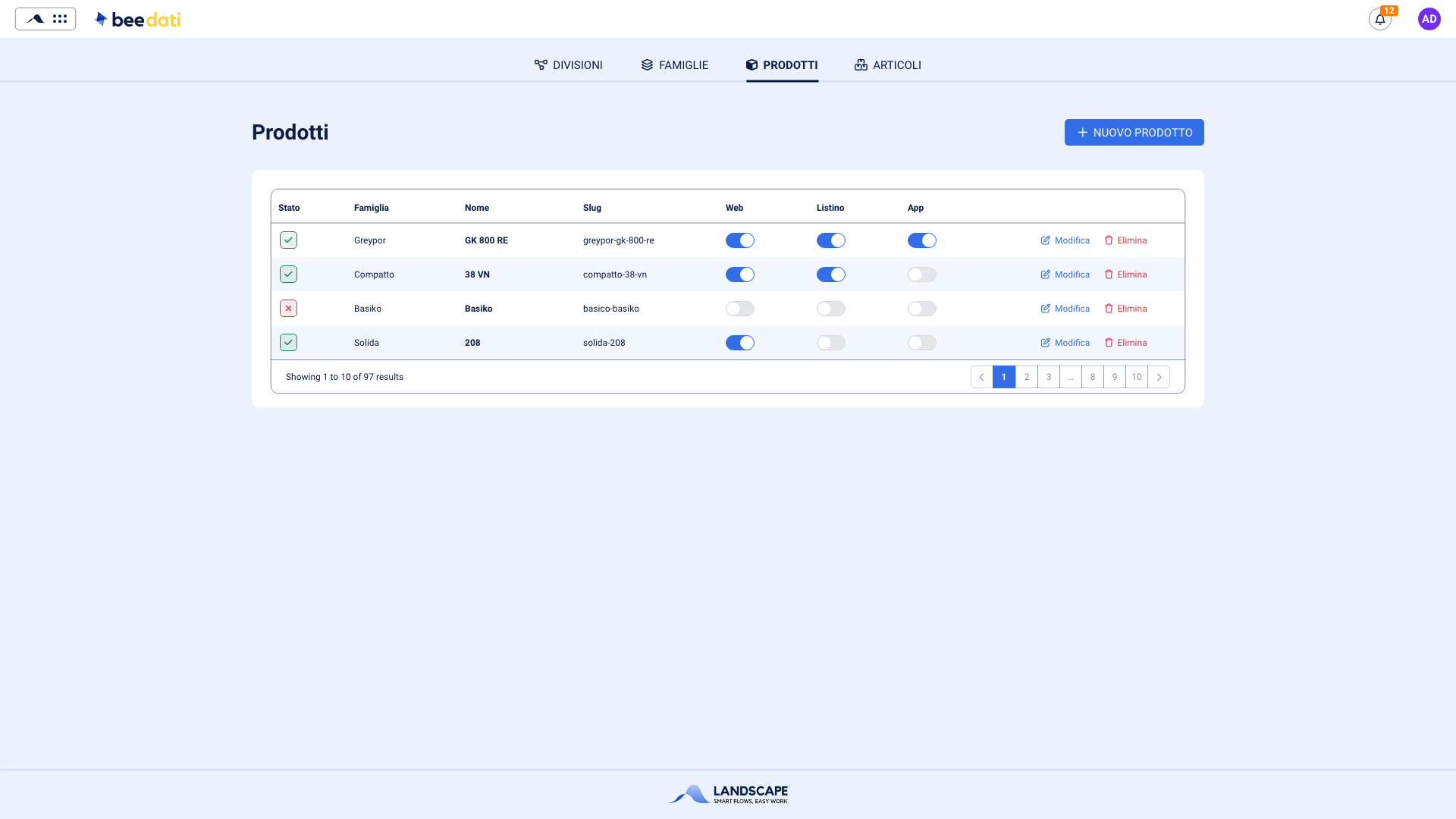
BEE is the application infrastructure that allows Landscape modules to exchange data and connect with external systems, ERP and machines. It is the layer that turns the suite into a real operating system, not just a collection of screens.
Each area groups modules built for real operational problems: planning, traceability, quality, quoting, customer care, margins and control. You can start from a single bottleneck and grow into a coherent ecosystem.
Each module has its own page with workflows, integrations and expected outcomes, so you can understand where it makes sense to start.
Production modules help plan, trace, control and maintain the operational flow while reducing information loss and slow reactions.
ANT
ANT brings order to production planning, task distribution and shift management.
ROW
ROW follows the product across operational stages and makes the real state of the factory visible.
IVY
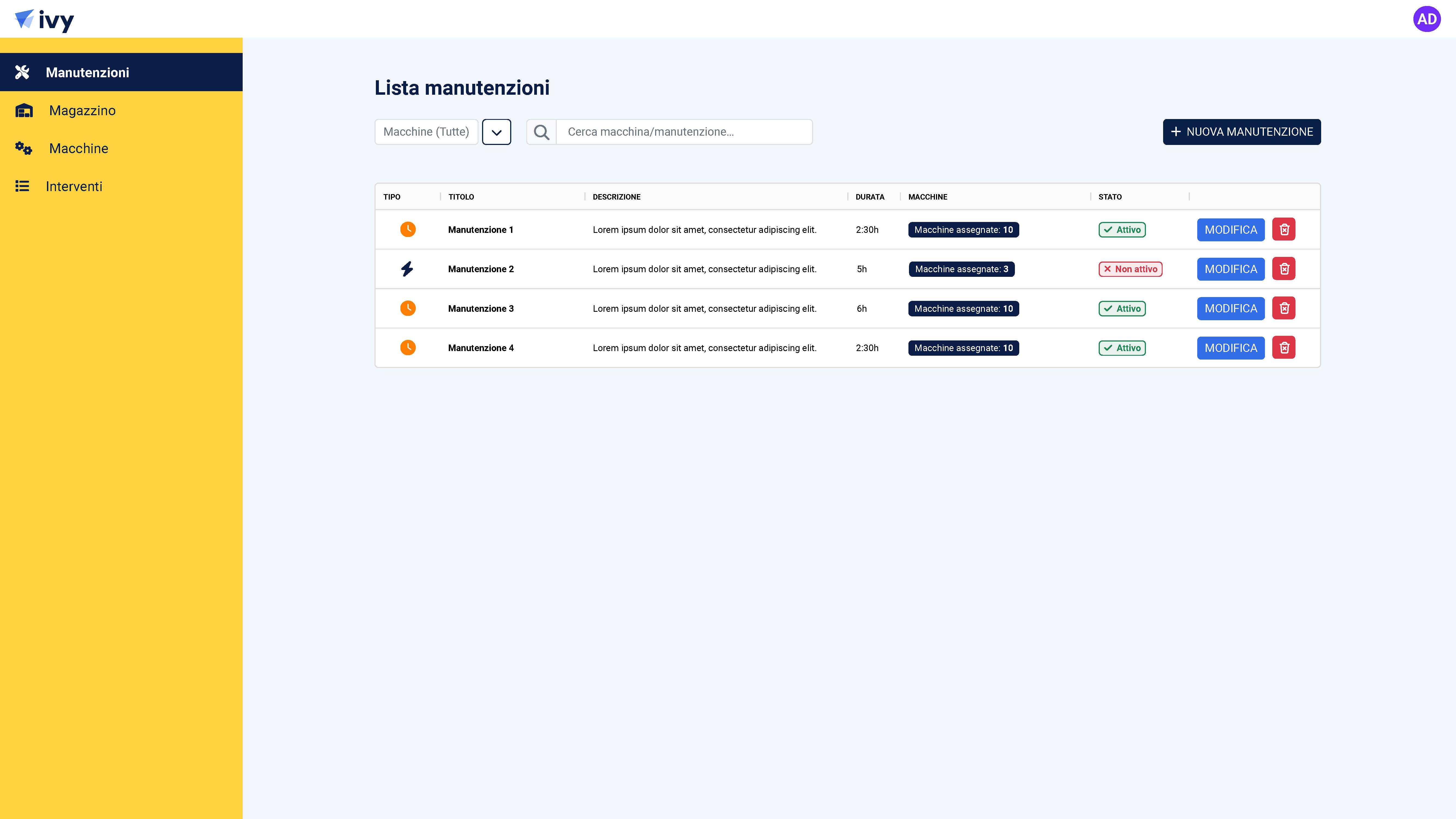
IVY supports preventive and extraordinary maintenance while recording interventions in a structured way.
AIR
AIR makes quality control more structured and routes issues to the right department quickly.
Sales modules keep together customer memory, quoting, technical documentation and request handling, improving responsiveness and service quality.
EAR
EAR helps sales teams record customer information and preserve context across visits, calls and follow-ups.
HAY
HAY simplifies quote and order creation by connecting technical, commercial and logistics information.
ZIP
ZIP captures incoming requests, signals and contacts while making the service funnel visible.
OAK
OAK organizes technical data, product sheets and documents that sales teams need to retrieve quickly during quoting and negotiation.
SOD
SOD helps distribute promotional material and creates visibility over support costs, usage and effectiveness.
DAM
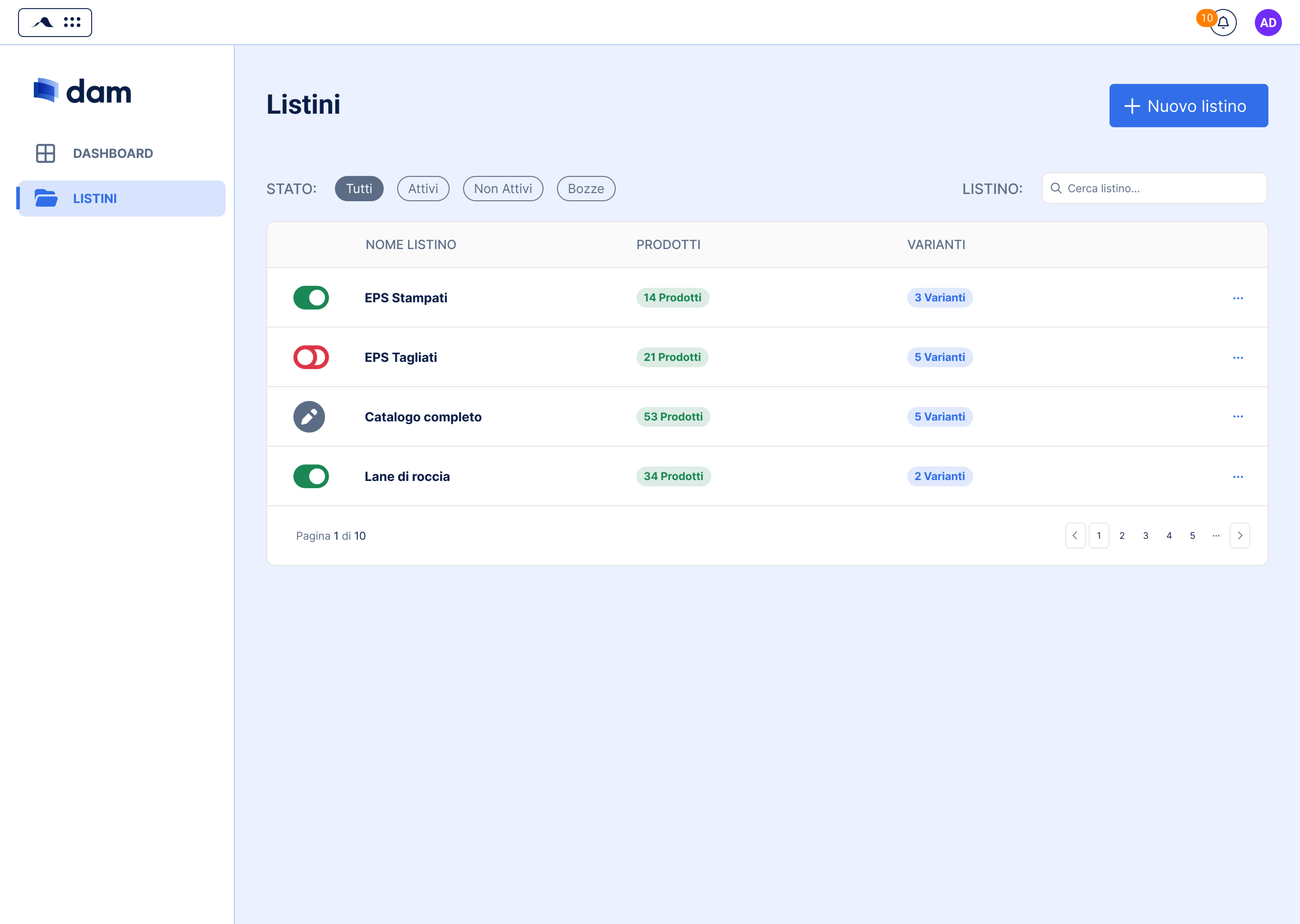
DAM helps structure commercial policies and manage price, discounts and margin decisions with more confidence.
Finance modules help classify accounts, read margins and connect financial data to operational choices.
TREE
TREE helps finance teams reshape accounting data into a view that is actually useful for understanding the company.
AI is not treated as a visual gimmick. OWL helps interpret data, speed up repetitive work, support less experienced users and make the relationship between people and systems more fluid.
Value does not come from software alone, but from how it enters the real flow of work. That is why the path is designed for adoption, not just installation.
We look at where delays, rework, lost data and unclear ownership are actually happening.
We define which modules to activate first, what integrations matter and which information must become traceable.
We bring the modules into the real process with interfaces and automations built for the people using them every day.
Once the first block creates value, we extend the system to new departments, automations and use cases.
Landscape is especially useful when business performance depends on operational continuity, cross-team coordination and shared data quality.
For companies that need better visibility on planning, quality, maintenance, lots and the real status of work.
For teams that need stronger structure around relationships, quotes, technical documents and incoming requests.
For teams that need to classify, read and connect economic data with operational dynamics.
At the beginning, the most important questions are usually about integrations, timing, adoption and project scope.
Landscape is delivered as a turnkey project and, when the current regulation allows it, it can fit digitalization and Industry 4.0 initiatives supported by subsidized finance instruments.
Access to incentives always depends on project requirements and on the regulation in force at the time of the investment.
We do not show an abstract suite. We start from your operational flow, the friction points slowing work down and the departments that need to collaborate better.